
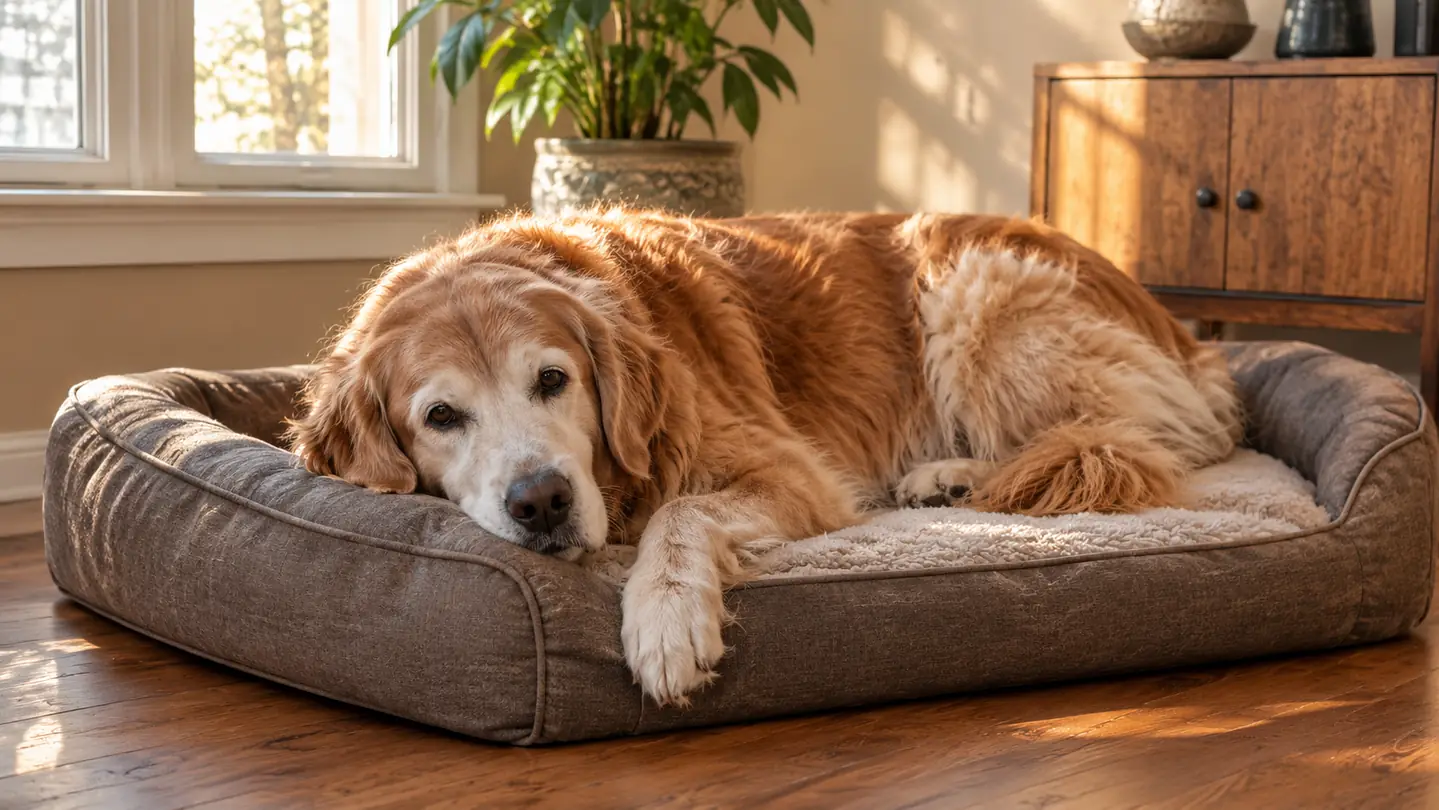
When a dog gets to be eleven, you start noticing the small things. Rusty, our Golden Retriever, still loves his morning walk, but he gets up stiff from a nap, and those three steps down to the backyard have gotten slower every year. Somewhere in there I realized the floor was no longer doing him any favors. A senior dog with sore hips needs a bed that does more than look nice. It needs to support him, stay clean, and survive the reality of an older dog's bladder. That search is how I ended up with the Bedsure orthopedic dog bed, and it is also how I learned what actually matters when you are choosing one for your own dog. What I want for Rusty is the same thing I want for myself at sixty-four: a soft place to land at the end of the day.
The problem with shopping for an orthopedic bed is that the label gets slapped on almost anything. A thin slab of foam with a printed paw print can call itself orthopedic. I wanted a checklist I could carry into any product page and run down, so I could tell real support from marketing. Here is the checklist I used, in the order I used it, with the notes from Rusty's trial run on the Bedsure bed woven in. If your dog is older, stiff, or slowing down, this is the process I would use again, and I think it will save you the mistake I almost made: buying the first pretty bed I saw. The whole process took me about three weeks, and most of that time was wasted on beds that looked right and were wrong.
The bed I landed on for Rusty
The Bedsure orthopedic dog bed in the large size. Rectangular, with a 4-sided bolster design, CertiPUR-US certified foam, and a removable, waterproof cover that comes off for the wash. It is the bed I kept coming back to after measuring, comparing, and second-guessing.
Amazon Check Today's Price on Amazon →Step 1: Measure your dog before you measure the bed
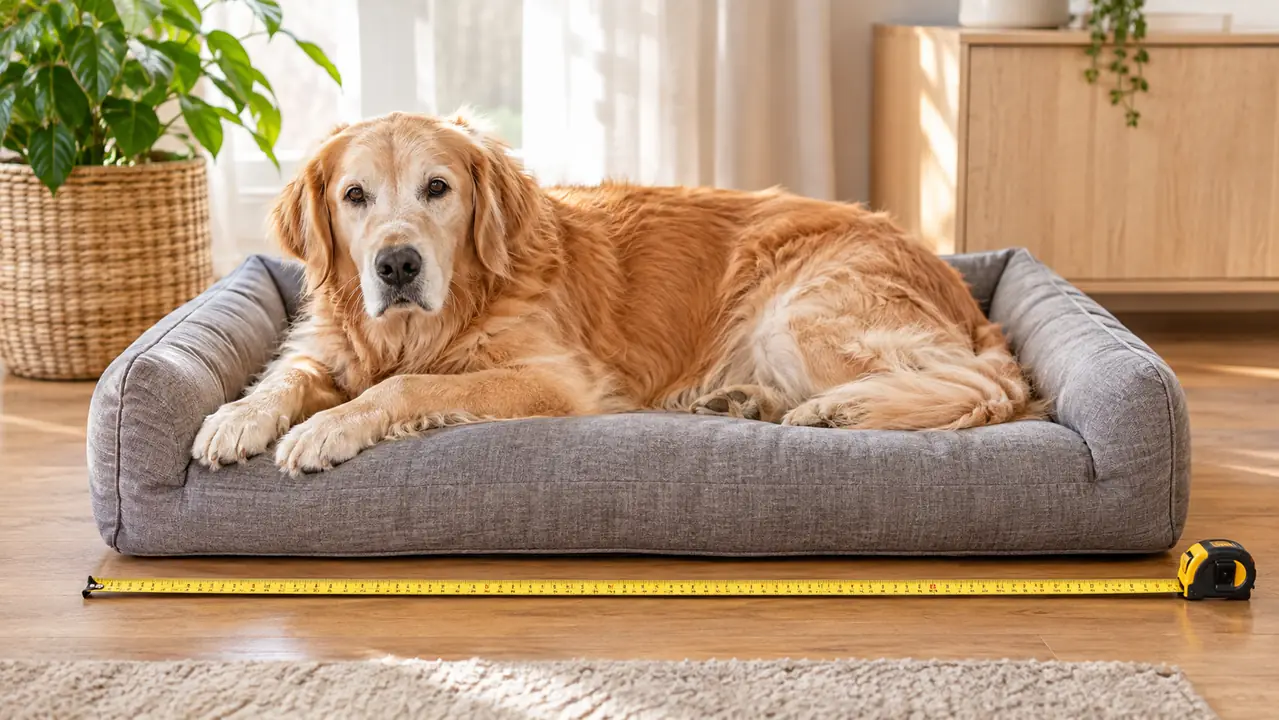
Start with the dog, not the catalog. Measure from the tip of his nose to the base of his tail while he is standing, then add six to twelve inches. Rusty is about 70 pounds and likes to stretch out when he sleeps, so I wanted a bed he could lie flat in, not curl up on. A bed that is too short means the hips and shoulders hang off the edge, which is the exact thing you are trying to fix with an orthopedic bed in the first place. I measured Rusty three times to be sure, because he refuses to hold still for anything.
The Bedsure bed lists at 35 by 7 by 25 inches. For Rusty, that means room to stretch out with his head resting on the raised edge, and the numbers match the space where the bed lives. The bed sits in the corner of the living room on hardwood, and the 35-inch length fits the wall without blocking the walkway. A bed that is too big for the room gets shoved aside, and then the dog ends up on the floor anyway, which is the whole problem again.
Measure the spot, not just the dog. Senior dogs can gain or lose weight, and the bed that fit in the spring can feel cramped by fall, so I measure Rusty again every six months. The tape measure takes thirty seconds and it has saved me from buying a bed that looked right in the photo and was wrong in the room.
Step 2: Decide what orthopedic support should actually do
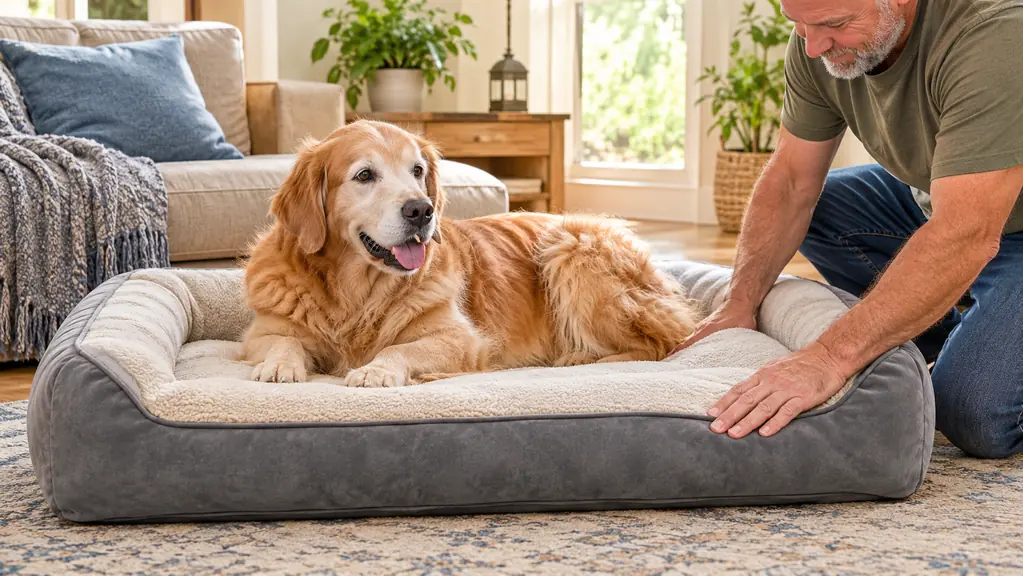
Orthopedic, in the honest sense, means the bed supports the joints instead of letting the body sink into a hammock. A dog with stiff hips needs firm, even support under the hips and spine, with just enough give to be comfortable. The Bedsure bed uses CertiPUR-US certified foam, which is a real standard for foam that performs and tests clean. That certification matters more to me than a fancy name on the box. The word orthopedic gets thrown around, but the foam underneath the cover is what does the work.
The other thing to look for is how the bed handles the head and neck. Rusty likes to rest his head on something when he sleeps. The Bedsure bed has a 4-sided bolster design, which means a raised edge on all four sides, so he can prop his head no matter which way he turns. That may sound like a small thing, but for a dog with stiffness in the back hips, being able to shift position without rolling off the edge is a big deal.
Ask yourself what your dog actually does at night. Does he stretch out, curl up, or prop his head on the arm of the couch? Match the bed to that habit, not to the prettiest picture in the listing. A senior dog spends more hours lying down than he did at three or four, so the support he gets from the bed matters more now than it ever did when he was young.
Step 3: Put the cover to the test before you need it to pass
This is the step I almost skipped, and it is the one that has saved me the most laundry. An older dog has accidents. Not every night, but often enough that a bed you cannot wash becomes a bed you throw away. The Bedsure bed has a removable cover that comes off and goes in the washer, and the bed is listed as waterproof, easy to clean, and made with pet safe materials. For me, waterproof means the foam stays dry when the cover gets wet, and the cover itself survives repeated washings.
Before you buy any bed, read the care instructions the way you would read a prescription. If the cover is not removable, or if the listing says spot clean only, think hard about whether you want that bed in your house for the next few years. Senior dogs drool, track in mud from the morning walk, and sometimes have a bad night. The bed you can clean is the bed you will actually keep using. I learned this the hard way with a different bed years ago, and I am still annoyed at myself about it.
I will say this for the Bedsure cover: it has held up to the wash so far, which is more than I can say for every cover I have owned. The waterproof layer does its job quietly, which is the best thing you can say about a waterproof layer. And the bed is certified to OEKO-TEX standards for pet safe materials, which matters when your dog spends half the day with his nose in it.
Step 4: Think about the floor under the bed
Our house is one story with hardwood and tile floors. Great for cleaning, terrible for an old dog trying to stand up. Rusty's feet slide on the wood when he first gets up, and a bed sitting directly on a slick floor makes it worse. The bed itself is only part of the equation. Think about what is underneath it, because the floor is what your dog's feet touch first. When Rusty was younger he would launch himself off the couch without a thought. Now he hesitates, and I watch his feet.
The Bedsure bed weighs just over five pounds, so I can move it from the living room to the bedroom without a struggle, and I can sweep under it. If your dog has trouble standing, consider a non-slip mat or rug under the bed, or at least check that the bed does not slide when your dog steps on and off. A bed that slides across the floor is a bed your dog will learn to avoid.
Rusty is slow on the three steps down to the backyard, so I also keep a clear path from his bed to the door. A senior dog navigating the house at night is safer when the route is predictable. Move furniture, tuck cords away, and give the bed a spot that is easy to reach from both the couch and the hallway. Sure footing is not just about the bed. It is about the whole path.
Step 5: Give it a two-week trial before you decide
The real test is not the listing. It is whether your dog chooses the bed. When the Bedsure bed arrived, I put it in Rusty's corner and watched. The first afternoon he circled it twice and lay down with his head on the bolster. By the second week, he was going to the bed on his own after his morning walk, which for a creature of habit is the strongest review he can give.
Keep a simple record for two weeks. Does he sleep longer? Does he get up less stiff? Does he choose the bed over the floor or the rug? If the answer to all three is yes, you have a keeper. If not, send it back and try a different shape or size. Most online sellers make returns easy, and a bed that does not work is not a bargain no matter the cost. Keep the record somewhere you will see it, like on the refrigerator, or you will forget by day four.
One more thing. If your dog has a diagnosed condition like arthritis or hip dysplasia, ask your veterinarian whether a specific bed height or support level is right before you commit. I am not a vet, and I do not pretend to be one. Your vet knows your dog's joints better than any product page does, and a five-minute phone call is worth more than an hour of reading reviews.
What Else Helps
A good bed does a lot, but it is one piece of the puzzle. For Rusty, the morning walk is still the best thing we do together. Twenty to thirty minutes at his pace, not mine, keeps his hips moving without wearing him out. Gentle daily movement, sure footing, and a soft place to land work as a team. If your dog is slowing down, talk to your vet before changing anything, especially if there is a diagnosed condition in the picture.
Inside the house, I look for other places where his joints meet the floor. A mat in front of the back door, a rug along the hallway where he walks, and a second resting spot in the bedroom if the house is big enough. The Bedsure bed is easy to move, so on cold days I shift it to wherever Rusty is spending the afternoon. Keep his nails trimmed, because long nails change the way a dog stands and make every step harder.
One habit that helped us: I put the bed where Rusty already liked to nap, not in a corner I picked out. Dogs vote with their bodies. Put the bed where the dog already sleeps, and you will both be happier. And if you are reading this before you have bought anything, start with the tape measure. The right size, the right support, and a washable cover will get you most of the way there. The bed is a tool, not a cure. It works best when the rest of the day is gentle on those hips.
One thing I do not do is let the bed do all the work. Rusty still gets his walk every morning, even on the days he seems stiff at first. Moving a little, warming up those hips, then coming home to a soft bed, that is the rhythm that has worked for us.
By the second week, Rusty was going to the bed on his own after his morning walk. For a creature of habit, that is the strongest review he can give.
A softer place for an old dog to land
The Bedsure orthopedic dog bed checks the boxes that mattered most for Rusty: room to stretch, a bolster for his head, a cover that comes off for the wash, and foam with a real certification behind it. Measure your dog, match the support, and give it two honest weeks.
Amazon Check Today's Price on Amazon →