
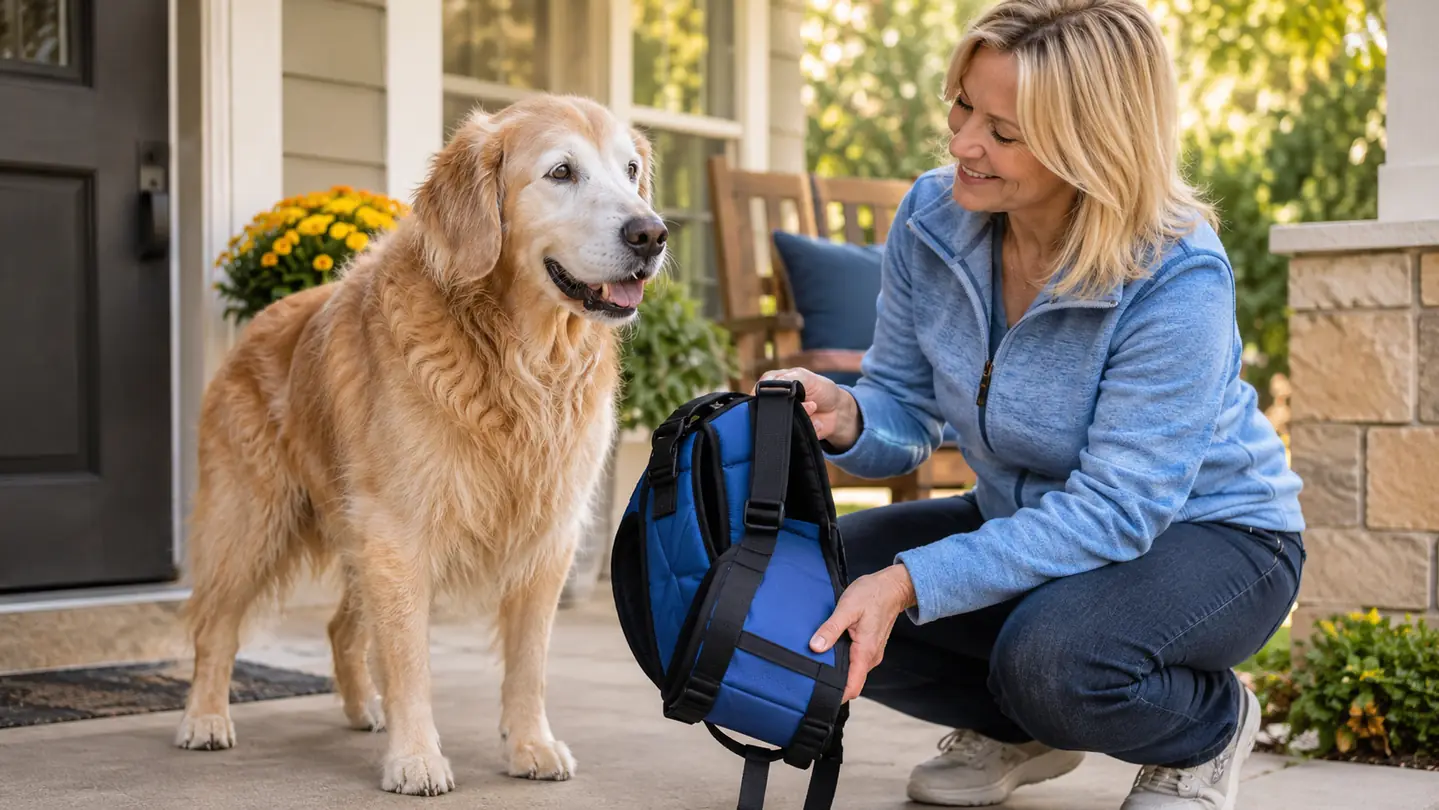
My dog Rusty is 11, a Golden Retriever mix of about 70 pounds, and his back hips are not what they used to be. He manages the morning walk fine once he is moving, but those three steps down to the backyard have become a production. He hesitates, he tests each step, and sometimes he just stands there until I come help. So when I started looking at hind-leg support slings, the LOOBANI Dog Lift Harness kept coming up. I bought one. I used it every day for four months. This is the review I wish I had read before I ordered it.
The Quick Verdict
The Loobani lift harness genuinely helps with stairs, getting into the car, and steadying a dog after a nap. It is not a full-body lift, it will not fix joint problems, and it is not a walking aid. Buy it for the steps and the car, not for the sidewalk.
Amazon Check Today's Price →Need a hand for the back-porch steps?
The Loobani Dog Lift Harness gives you a real grip on a wobbly hind end, and it folds into a bag you can keep in the car. It has 13,000-plus ratings and a 4.5-star average for a reason. See today's price and current reviews on Amazon.
Amazon Check Today's Price on Amazon →How I've Used It
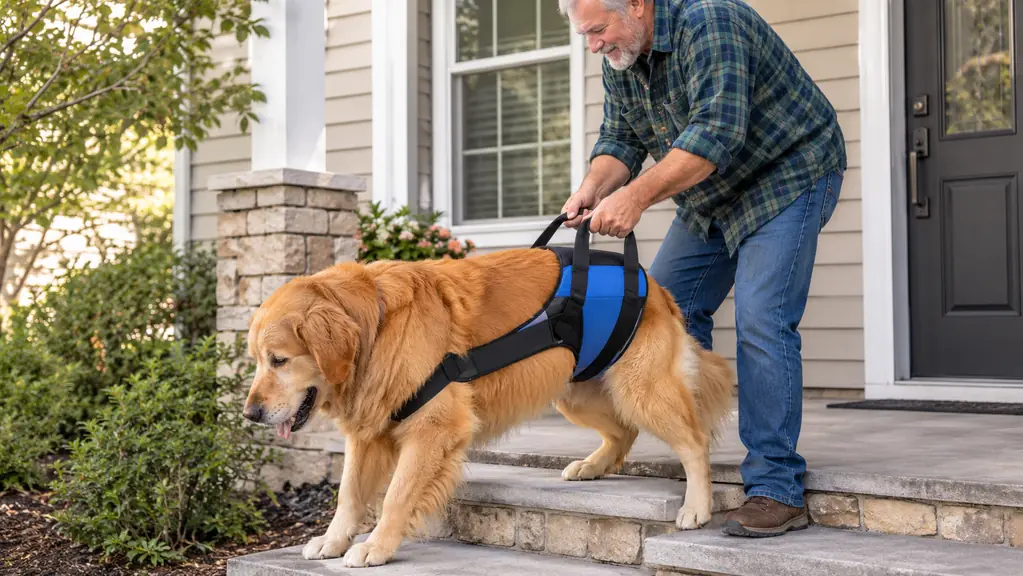
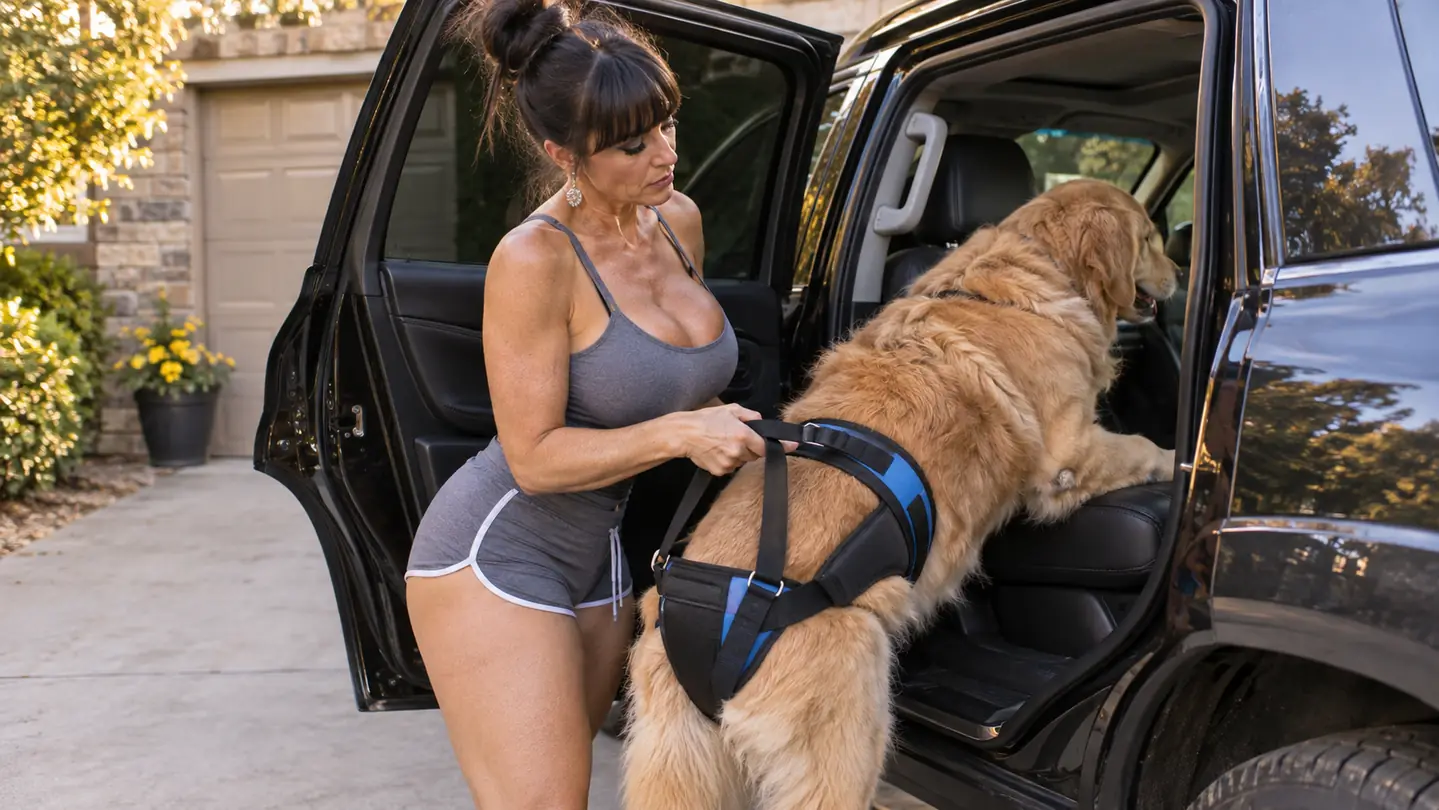
I will be straight with you: I did not use this harness on a leash, and I did not use it on our 25-minute morning walk. The listing talks about helping a dog stand up, go up and down stairs, and get in and out of vehicles. Those are exactly the jobs I tested. Rusty and I did the three back-porch steps at least twice a day, the step up into the back of our SUV a few times a week, and the getting-up-from-a-nap routine every single afternoon.
The harness is an X-Large, which is what LOOBANI recommends for large breeds. It weighs 14.88 ounces, so it is light enough to keep in the included storage bag in the car. The sling is nylon with a drawstring closure, and the inside has a soft, sheepskin-like lining. The whole thing is machine washable, which I have put to the test more than once, because a 70-pound dog who has just been in the yard is not clean.
The first time I used it, I was surprised by how simple it is. There are no buckles, no clips, no straps to route. You slide the sling under the dog's belly, cinch the drawstring so it sits snug behind the ribcage and in front of the back legs, and grab the handle on top. That is the whole design. Simple is a feature when you are trying to hold a dog steady and the dog is not cooperating.
Those first two weeks, I kept the sling in its storage bag by the back door, and I used it only for the porch steps. The package dimensions are 9.88 by 4.17 by 4.09 inches, so the whole thing, bag included, fits in the door pocket of the car. That matters more than it sounds. A mobility aid you have to go find is a mobility aid you will not use. Because this one was always within reach, I ended up using it at a friend's house in Fort Worth, where Rusty needed help with two unfamiliar front steps, and in the parking lot at the vet's office, where he balked at the curb after a long appointment. I did not plan to test it in three different places. It just happened, because the sling was already in my hand. And because it folds flat, it does not get in the way when I need something else from the door pocket. That sounds like a small thing, but it is the difference between a tool that stays in the car and a tool that ends up in the garage.
What the Specs Actually Tell You
Here is what the LOOBANI listing does and does not say. It says the sling supports weak rear legs, helps with standing, stairs, and vehicles, and uses a thickening design with a soft lining. The specs list an X-Large size, nylon material, a drawstring closure, and a storage bag. Machine washable. That is the whole product. There is no frame, no rigid handle bar, no extra chest support, and no front-end harness.
One spec worth reading twice is the item weight: 14.88 ounces. That is less than a pound, which is the reason I am willing to carry the sling from the back door to the car and back again. The included components are just the dog sling and the storage bag. There is no handle pad, no extension strap, and no second adjustment beyond the drawstring. The drawstring is the only closure, and it is the only way to change the fit. I mention this because I have bought dog gear that arrived with a parts list longer than the instructions, and this is not that product. What you see in the listing is what comes in the box, and what comes in the box is enough. I weighed it on our kitchen scale the first week, just to check the listing, and it came in right at the number. That kind of accuracy makes me trust the rest of the specs too.
That last part matters more than you might think. A sling like this supports the hind end only. It does nothing for the front legs, and it does nothing for a dog who needs help in the middle. If your dog's problem is mostly in the back hips, like Rusty's is, this is the right tool. If your dog has weakness all over, or needs full-body support to stand, this sling will leave you doing most of the work.
The sheepskin-like lining is not a gimmick. Rusty has thinning fur on his belly, and the first thing I checked was whether the sling would rub. It does not. The soft lining grips his belly enough to keep the sling in place, but it does not chafe, even on days when I had to help him up three or four times. That is a small thing until it is the difference between a dog who tolerates the sling and a dog who fights it.
The Grip Is Good. The Position Is on You.
Here is what nobody tells you in the reviews. The handle gives you a solid grip, but you have to keep the sling positioned correctly while you lift. If it drifts forward toward his ribs, you lose the support under the hips. If it drifts back toward his flank, the sling bunches and he feels it. Every single time I use it, I have to check the position before I lift. That takes about two seconds, but it is a step the listing does not mention.
One Saturday morning in October, I learned the position lesson the hard way. Rusty was coming down the porch steps, and I had slid the sling under him in a hurry, not checking that it sat snug behind his ribcage. Halfway down the middle step, I felt it slip forward and take the weight against his ribs instead of his hips. He stopped, looked back at me, and I had to set him down, reset the sling, and start over. He was not hurt, and he did not seem bothered, but it taught me that this tool only works when you set it up right every single time. There is no click to tell you it is seated, no mark on the nylon to show where it belongs. You check the position, you lift, and you go. Dale watched me do this once and said it looked like I was helping Rusty put on a pair of pants. That is not far off. You slide, you snug, you lift. The whole thing takes less time than finding your keys.
It is also not a one-handed tool. You need one hand on the handle and one hand steadying the dog, or one hand on the handle and one hand on the door frame, or one hand on the handle and one hand on your own knee because you are bent over. For the porch steps, I stand behind Rusty, get the sling snug, and lift with my legs. The harness gives me the grip. The position is on me.
I will also tell you what surprised me: it is easier to use on the car step-up than on the porch steps. When Rusty is going up into the SUV, he does half the work himself, and the sling just takes the weight off the back end for the last few inches. On the porch steps, coming down, he is more hesitant, and the sling does not give him confidence the way I hoped. It gives me grip, and I give him confidence. That is the honest division of labor.
Where It Genuinely Helped
The back-porch steps got easier. Not because the harness carries him, but because I can take real weight off his back hips while he works the front end. He stops, I lift a little, and he moves a foot. Repeat. It is not graceful, but it is safer, for both of us. My own back thanks me, because I am not bent over trying to scoop 70 pounds of dog.
The car is where the LOOBANI earns its keep. Rusty can get his front paws up on the seat, but the back end needs a boost. Without the harness, I was grabbing his hips and hoping. With the harness, I have a handle, a straight back, and a dog who knows the routine. It takes one smooth lift instead of three awkward ones.
The car test happened on a Tuesday in early November. We were heading to the groomer, and Rusty was stiffer than usual after a cold night. He got his front paws up on the seat, then stopped, with his back feet still on the driveway. The old way, I would have grabbed him around the hips and heaved, which is how I pulled my own back two years ago helping a friend's Lab into a truck. Instead I got the sling from the car door pocket, slid it under him, and lifted with the handle while he pushed with his front legs. One smooth motion and he was in. It took maybe ten seconds. I stood there for a moment, honestly a little surprised at how easy it was. That Tuesday is the day I would point to if someone asked me whether this harness is worth owning. It is not the most dramatic moment, and nothing about it looked impressive. It just worked, quietly, the way good tools do.
The third win is the after-nap wobble. Rusty sleeps hard, and when he first stands up, his back hips are stiff and his back feet slide on the hardwood. I keep the sling by the back door, and when he gives me the look, I slide it under him and walk him a few steps until his feet wake up. It is not a medical treatment. It is a steadying hand, and for a stiff old dog, a steadying hand is a lot.
The Loobani harness will not fix your dog's hips. It will give you a better grip on a wobbly hind end, and for the stairs and the car, that grip is the whole job.
Where It Stops Helping
I tried using it on our morning walk, because I wanted it to work there. It did not. The leg straps ride up, the sling drifts forward, and I spent the whole block stopping to adjust it. Rusty did not seem to mind, but I minded. This is not a walking harness. It is a lifting sling. If you want help on walks, you want a different product, one with leg loops that stay put and a handle that does not shift.
It also will not help a dog who needs more than a hind-end boost. If your dog cannot bear weight on the front legs, or needs support in the middle of the body, this sling is not enough. And if your dog is much heavier than Rusty, say 90 pounds or more, you should think carefully about whether you can manage that weight with one handle and one hand. The harness gives you grip. It does not give you a second set of arms.
The other limit is the one I keep coming back to: it is a tool, not a cure. Rusty is stiff in the hips because he is 11 and he has lived a good, full life. No sling changes that. What the sling changes is how much I have to strain to help him, and how steady he feels when he takes those three steps. That is real. It is just not magic, and it is not a replacement for a vet visit.
The Bottom Line
After four months of daily use, the LOOBANI Dog Lift Harness has a permanent spot by our back door. It is well made for the price, the nylon and stitching have held up through repeated machine washes, and the storage bag means it lives in the car when we travel. I do not reach for it on walks, and I do not pretend it fixes Rusty's hips. I reach for it when he needs a hand, and it gives me a good one.
What I Liked
- Soft sheepskin-like lining that does not chafe, even on a senior dog with thinning belly fur
- Simple drawstring design with no buckles or clips to fight with while holding a wobbly dog
- Genuinely helps with stairs, getting into a vehicle, and steadying a dog after a nap
- Lightweight at 14.88 ounces and folds into the included storage bag for the car
- Machine washable, which you will appreciate the first time you use it after a muddy yard
Where It Falls Short
- The sling can drift forward or backward if you do not check the position before every lift
- Not a walking aid; the leg straps ride up and the sling shifts on the sidewalk
- Supports the hind end only, so it will not help a dog that needs full-body or front-end support
- You still have to do the lifting; the harness gives you grip, not a second set of arms
Who This Is For
Buy the LOOBANI lift harness if you have a senior dog who is stiff in the back hips but still wants to move. Buy it if you have a dog who needs a boost into the car, or a dog who hesitates on the porch steps, or a dog who wobbles when he first stands up from a nap. Buy it if you are a person whose own back is tired of doing all the lifting. It is a simple, honest tool for a very specific job, and it does that job well.
Who Should Skip It
Skip it if your dog needs help with the front end, or full-body support, or if you are hoping a sling will fix an underlying joint problem. That is a veterinarian's job, and no harness is a substitute. Skip it if you want help on walks, because this is not the product for that. And if your dog is well over 80 pounds, think hard about whether one handle is enough for you to manage the weight safely. The harness makes lifting easier. It does not make lifting effortless.
The honest version, in one line
The Loobani Dog Lift Harness is the best simple tool I have found for the back-porch steps and the car, and I have used it every day for four months. It will not do everything, but what it does, it does well. Check today's price and current reviews on Amazon.
Amazon Check Today's Price on Amazon →